Format
This activity is available as a written article. An AI-generated MP3 auido file is available for those who wish to listen to the article.
CME Credit Available
This activity offers
1 Category 1-B AOA
1 AMA PRA Category 1 Credits™
About
Vasomotor symptoms (VMS) are some of the most bothersome presentations associated with menopause. They occur in up to 80% of women and can persist, on average, for an entire decade. Hot flushes, also known as hot flashes, are often the most distressing symptom of menopause and represent the most frequent reason women seek medical care during this transitional period in their lives. VMS cause so much disruption in women’s lives that studies have demonstrated women can accurately recall the frequency, severity, and specific impact on their lives several years after menopausal symptoms have subsided. The FDA recently approved the first of a new class of drugs to address VMS - the first advance in this areas in decades.
Faculty
Diana Okuniewski, DO, FACOOG
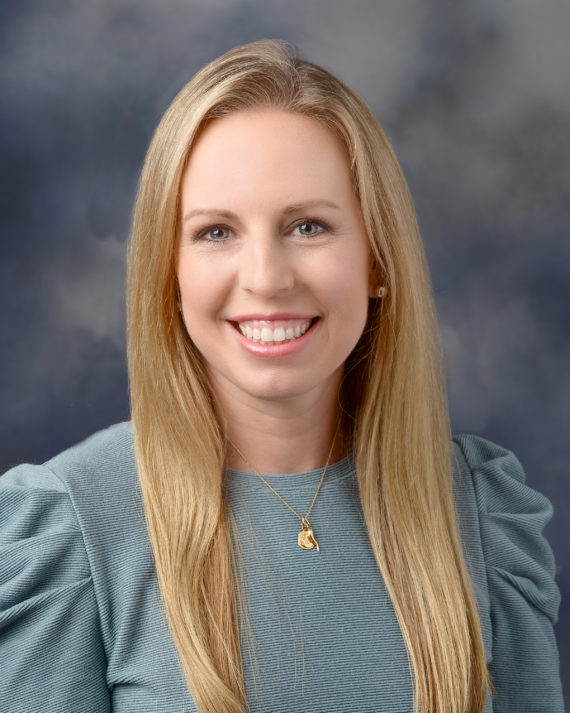 |
Dr. Diana Okuniewski is a Board-Certified OB/GYN who received a B.A. in Biology from Kalamazoo College in Kalamazoo, MI, and Medical Degree from Michigan State University College of Osteopathic Medicine in East Lansing, MI. She completed an internship and residency in Obstetrics and Gynecology at Ingham Regional Medical Center in Lansing, MI. Dr. Okuniewski is licensed in Michigan, Ohio, and Rhode Island, and provides on-site leadership as the Site Director of Hospitalists.
Dr. Okuniewski serves on the CME Committee for the American College of Osteopathic Obstetricians and Gynecologists and is a frequent presenter and contributer to CME activities. |
Learning Objectives
Those participating in this activity will receive information that should allow them to:
- Assess and identify the appropriate candidates for hormone therapy for vasomotor symptoms, taking into account individual patient risk factors such as history of breast cancer, coronary heart disease, venous thromboembolic events, stroke, and liver disease.
- Evaluate FDA-approved hormonal and non-hormonal treatments for VMS, including the risks and benefits associated with each, in order to personalize therapy for each patient.
- Compare the effectiveness of alternative non-hormonal therapies for VMS, such as SSRIs/SNRIs, gabapentin, clonidine, and oxybutynin, with patients to involve them in shared decision-making.
- Evaluate novel therapeutics, such as neurokinin B antagonists, for managing VMS in patients who are unable or unwilling to take hormone therapy.
Conflict of Interest DisclosuresACOOG requires each planner and presenter to identify all conflicts of interest, and mitigates risk of bias using a series of strategies for relevant conflicts. Unless otherwise noted below, the ACOOG, ACOOG staff and planners for this activity have no relevant financial relationships to disclose.
Dr. Okuniewski has no relevant relationships with ineligible companies to disclose.
Release & Review Date
This activity is valid between June 1, 2023 and December 31, 2023.
System Requirements
An internet connected device (computer or mobile device) with high speed access is required. It is designed to work on most popular web browsers. JavaScript and cookies should be enabled in your browser in order for the activity to properly work. If you're experiencing technical issues, please update your browser, and clear your browsing history, cookies, and cache. This often solves most common technical issues.
Requirements for Successful Completion
To successfully complete this activity, participants must:
- Complete the pre-test
- Read the text-based content
- Pass the post-test (70% or greater)
- Complete the activity evaluation
- Claim credit
A certificate will be immediately available.
Commercial Support
This actoivity is supported by an educational grant from Astellas.
CME Accreditation
The American College of Osteopathic Obstetricians and Gynecologists is accredited by the American Osteopathic Association to provide osteopathic continuing medical education for physicians.
The American College of Osteopathic Obstetricians and Gynecologists is accredited by the Accreditation Council for Continuing Medical Education to provide continuing medical education for physicians.
CME Credit DesignationThe American College of Osteopathic Obstetricians and Gynecologists designates this program for a maximum of 1 AOA Category 1-B credits and will report CME and specialty credits commensurate with the extent of the physician’s participation in this activity.
The American College of Osteopathic Obstetricians and Gynecologists designates this enduring activity for a maximum of 1 AMA PRA Category 1 Credits™.
Physicians should only claim credit commensurate with the extent of their participation in the activity.
ACOG Cognate Credit(s)
The American College of Osteopathic Obstetricians and Gynecologists designates this activity for Category 1 College Cognate Credits. Maximum Cognates are equal to the number of maximum AMA PRA Category 1 CreditsTM . A reciprocity agreement with the AMA exists that allows AMA PRA Category 1 CreditsTM to be equivalent to ACOG Cognate Credits.
NPs, PAs & CNMs
The American Academy of Nurse Practitioners Certification Board (AANPCB) recognizes activities approved for Category 1-A credit through the American Osteopathic Association and Category 1 AMA PRA Category 1 Credits™ as providing advanced practice CE content hours for applicants seeking renewal through continuing education credit.
The National Commission on Certification of Physician Assistants (NCCPA) recognizes activities approved for Category 1-A credit through the American Osteopathic Association and AMA PRA Category 1 Credits™ as Regular Category 1 CME for national certification maintenance.
The Certificate Maintenance Program of the American Midwifery Certification Board accepts AMA PRA Category 1 Credits™ to satisfy its contact hours requirement.
All NPs, PAs, CNMs and other health professionals participating in this activity will receive a certificate of completion commensurate with the extent of their participation in the activity. ACOOG strongly recommends all non-physician health professionals check with their certification/licensing organizations to confirm credit reciprocity.
Disclaimer
This activity is offered by the American College of Osteopathic Obstetricians and Gynecologists (ACOOG) for educational purposes only. Every patient case is different, and physicians must rely on their medical knowledge, experience, and relationships with patients to make clinical decisions. This material is not intended to represent the best or only methods or procedures appropriate for the condition discussed; rather the material is intended to present an approach, view, statement or opinion of the authors or presenters, which may be helpful, or of interest to other practitioners. Physician judgment must remain central to the selection of diagnostic tests, management strategies, therapy options, and follow-up of a specific patient's medical condition.
Use of Artificial Intelligence
The closed captions and summaries provided in this content are automatically generated by artificial intelligence (AI). While AI can enhance accessibility and comprehension, it is not infallible and may produce errors. Please keep this in mind as you engage with and apply the content.
Grievances
Any registrant finding evidence that the continuing medical education program presented is inappropriate with regard to facilities, materials, content, or observes any unacceptable promotion by a commercial interest in the same room as the educational activity, whether by company representative or presenter, may submit a grievance in writing to ACOOG, PO Box 17598, Fort Worth, TX 76102. Unresolved issues regarding this activity will require a formal written complaint to the AOA Division of CME, 142 East Ontario Street, Chicago, IL 60611.
Privacy Policy
This activity complies with ACOOG’s privacy policies.
Data Use
Data collected as part of this activity may be analyzed as part of educational research to study the effectiveness of educational interventions on health care, population health, health care providers and others, or to identify additional needs and gaps for future interventions.
Refunds
Refunds are not available for this educational product.